|
Astronomy with Binoculars
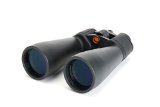
And a quick note about Edmund Scientific: They are currently running some great coupons until the end of 2008 for free shipping and price discounts on purchases 12% off on all orders over $100 at Edmund Scientific, use coupon code edmu12 to activate the discount. Coupons good from November 1 to December 31st. Free shipping on all orders over $75 for Edmund Scientific, use coupon code edmufs at checkout. Coupons good from November 1 to December 31st. Some Considerations of Binoculars Exit Pupil: One of the things you have to consider when using binoculars is the exit pupil of the binoculars. What do I mean by exit pupil? I mean that the pupil of your eye expands in darkness and you know this but did you know that it expands to about a maximum of 5mm? So this is the amount of view you can take in at once. And this is a factor when considering binoculars. Some binoculars can have an exit pupil that is larger than your eye can handle which means there is wasted magnification. So, I recommend you get binoculars with an exit pupil that is less than 5mm. And how you calculate the exit pupil is to divide the lens size by the magnification so if a pair of binoculars has a magnification of 10 and a lens size of 50mm you get an exit pupil of 5 which is the maximum allowable. A pair of binoculars with a maginification of 12 and a lens size of 60mm would also give you an exit pupil of 5. So when checking out binoculars do a quick check of the exit pupil. The binoculars at the top of this page are 15 X 70 which gives us a near perfect exit pupil of 4.67 . The Weight of the Binoculars This could be a consideration because you have to hold the binoculars up for long periods of time and it could cause fatigue and take away from the experience of astronomy with binoculars. So take a look at the weight of the binoculars and if you are getting a really heavy and large pair you may want to consider getting a tripod or some kind of a comfortable lawn chair so you can relax and enjoy it with ease. Getting a Book for Astronomy and Binoculars
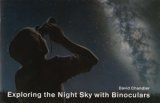
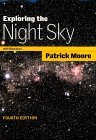
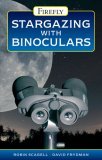
An excellent introduction to observational astronomy for beginners of any age. Award winner from the New York Academy of sciences Children's Science Book Award. Although not originally intended for children, the subject matter is clearly presented for readers of any age. Basics included range from how to choose binoculars to how we are located in our universe and what objects are readily accessible with household binoculars. Exploring the Night Sky with Binoculars Star-gazing with binoculars is rewarding and, for many, a lifelong passion! Patrick Moore has painstakingly researched Exploring the Night Sky with Binoculars to describe the optimal use of binoculars for astronomical observation. He explains basic astronomy and the selection of binoculars, then goes on to discuss the stars, clusters, nebulae and galaxies that await the observer. He charts the sky seen from the northern and southern hemispheres season by season, providing detailed maps of all the constellations. In addition, the reader can also observe the Sun, Moon, planets, comets and meteors. New to this Fourth Edition are: An improved presentation of all star maps, rendering a clear impression of what the night sky really looks like; planetary data through 2010; and advice on eclipse watching, including total eclipses of the sun. With many beautiful illustrations, this handbook will be helpful and encouraging to casual observers and those cultivating a more serious interest. The enjoyment of amateur astronomy is now available to everybody! A practical and concise guide to viewing the night sky through binoculars that includes information on choosing and using binoculars, what to observe, city vs country viewing, and information about accessories.
Binoculars at Edmund Scientific
|
||||||
( Edmund Scientifics April Special): Get 12% off all orders over $100 or more at Edmund Scientific use coupon code spring12 at checkout to save. Coupon does not apply to Telescopes, GPS or Cameras and is valid April 1st through April 30th. Articles: A guide to buying a Dobsonian Telescope A tour through the universe for casual or first time astronomers Telescopes are not just for nerds! Understanding Magnification and Telescopes or How high can a telescope go? Why is the eyepiece on the side of some telescopes? Understanding the parts of a reflector telescope The difference in performance, use, and cost between reflector and refractor telescopes You don't know much about telescopes but want to buy your first one? Here is my recommendation Make and use your own telescope for less than twenty bucks with this easy kit Astronomy with Binoculars a bit about what to know The biggest challenge to telescope users is overcome with Meade Telescopes
|
||||||