If you are considering the purchase of a Dobsonian telescope you are making a great decision. This type of telescope offers you remarkable light gathering power at a very reasonable cost. Astronomers know that the most important aspect of any telescope is the size of the primary lens or mirror - the bigger it is the more light you will gather and the more things you will be able to see. Dobsonians are perfect for this because you get maximum lens or mirror size at bargain prices.
All of the telescopes I show you in this article are available at amazon.com
What is a Dobsonian Telescope?
A dobsonian telescope is a Newtonian style reflector telescope that uses the traditional optical system of a newtonian but varies radically in its approach to the mount on which the telescope tube is placed. A more conventional type of newtonian telescope is mounted on an equatorial mount like the one in the picture here:
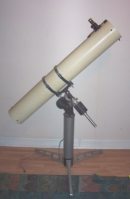
Newtonian telescope on an equatorial mount
The Tube assembly is a typical newtonian reflector. And the mount that it is on is an equatorial on a pedestal mount. This type of mount is well suited for astronomy in that it aligns up with the earths rotation and it only takes a single motion to follow objects across the sky. It is also well suited for a motor that will automatically move the scope and follow objects in the sky which is great for astrophotography.
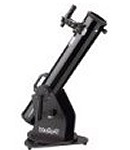
A Dobsonian Telescope
This shows a typical dobsonian. Notice how the tube assembly is pretty much the same as the newtonian shown above. The change is in the mount of the scope at the bottom. This simplified mount makes it very easy to set it up and to use it. You simply move the scope gently around to point at objects.
That change in the mount is what makes a dobsonian different and what makes it easy to use and much more affordable. When you use a system like this you are able to get a much larger mirror on the scope for a much lower cost. It is much more user friendly and beginner astronomers take to it very quickly. John Dobson is the creator of the Dobsonian telescope. He is a champion of amateur astronomy and has had many achievements in astronomy over many decades. He is also the co-founder of the San Francisco Sidewalk Astronomers Club.
Some of the benefits of a Dobsonian Telescope
Light gathering power vs. cost - First off, as I mentioned you get stunning light gathering ability at a very reasonable cost. A typical equatorial mount telescope of the same size would cost twice as much and if you were to buy a Schmidt-Cassegrain folded optics telescope of the same aperture you would easily pay four times the cost of a Dobsonian. And if you were to get a refractor of the same aperture the cost goes up to around ten times.
Ease of setup - This type of telescope is extemely easy to setup and for most models you simply place the tube on the mount and you are done. So if you are unfamiliar with equatorial mounts or are not mechanically inclined a dob is a good choice for you.
Simplicity of use - Pretty much a point and look kind of telescope. It easily rotates and turns to any location you want with no fuss.
Avid Amateur Astronomers love them - Because for the cost you can get enormous light gathering power (big mirrors) which means you can really get some fantastic viewing.
Trade-offs when buying a Dobsonian
I probably don't have to tell you that there are trade offs but there always are when you purchase anything. There are some deficiencies with Dobsonians that you will want to consider before you buy.
Not suited for astrophotography - Most dobsonians don't track objects across the sky which means you can't get long exposures and deep space photos. There are exceptions to this rule and Orion does make a dobsonion with computerized tracking control but this will cost you around an extra two hundred and fifty dollars. If you really think you want to put the time and effort into astrophotography you might want to overlook the dobsonian and get another type of scope.
They tend to be a bit heavy - The weight of them is similiar to traditional newtonian telescopes but significantly more than the folded optic type scopes that can be placed in a suitcase and carried around. Of course the folded optic types are much more expensive. Once initial assembly is done they come in two halves - the tube and the mount. And each half typically has a handle for carrying.
Now let's look at the different sizes of Dobsonians
Amazon.com has Dobsonians from Orion and Meade with mirrors that range from 4 1/2 inches in width to 12 inches in width. The cost (generally and subject to change) goes from a little over two hundred dollars to about a thousand dollars. So let's take a look at them. I will point out the pros and cons of each so you can make the decision that is right for you.
An entry level basic dobsonian telescope
A great place to start if you want to invest almost nothing before deciding if you want a bigger telescope.
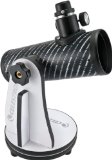 
Celestron 21024 FirstScope Telescope If you are new to telescopes and are looking for something at an extremely reasonable price yet want something that works pretty well then this might be the perfect choice for you. First off, it is made by Celestron, which is a premiere telescope making company. This also comes with two eyepieces which is a valuable addition. It is very portable and I can't say enough about this scope being a great way to dip your toe in the night sky. They call this a firstscope and they have got it exactly right.
What they have to say about it: ( I agree 100% with all of this) and you really can't go wrong with this telescope. It is an extremely good value.
FirstScope Telescope Official Product of the 2009 International Year of Astronomy. Ideal astronomical entry level telescope. The FirstScope Telescope pays tribute to Galileo Galilei and may of history's most notable astronomers and scientists. We honor these men and women for their contributions bringing us one step closer to understanding the universe around us. The compact design makes it easy to take with you on your next outdoor adventure. The FirstScope is also stylish enough to be used as a decorative fixture on your bookshelves or desk.
If you are interested in getting more performance and can spend a bit more money you should consider a dobsonian with a 6 inch mirror.
6 inch mirror telescopes
Now with the increase in mirror size we are starting to get more light gathering power out of the scope. This is more in the realm of achieving what you can get out of a dobsonian telescope yet it is still small enough and light enough to be comfortable to handle and move.
I recommend this Orion Telescope
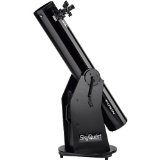 
Orion SkyQuest XT6 Classic Dobsonian Telescope
It's no wonder customers heap 5-star ratings on this "gentle giant." For not only does its jumbo-sized optics and uncomplicated design bring a "new level of joy to simple observing," raved Astronomy magazine, but it's also one of the most affordable quality Dobs on the market. The SkyQuest XT6 Classic isn't just good bang for the buck, it's a supernova of telescope value! The XT6 Classic gives you the deep-space thrills without the deep-pocket frills. We've kept it lean and mean to keep its price low for tight budgets. But rest assured, it comes fully equipped for adventure, whether you're a beginning stargazer or are graduating to a more capable instrument. It features an expertly figured parabolic mirror housed in an enameled steel optical tube. The tube rides on a stable Dobsonian base that allows easy point-and-view navigation and has a convenient carrying handle. A 2" Crayford focuser, EZ Finder II aiming device, 25mm Sirius Plossl eyepiece (1.25"), and quick-collimation cap are all standard equipment. Setup takes only a minute, leaving the rest of the evening to marvel at the planets, the Moon, and a myriad of deep-sky treasures. Enjoy the fantastic views - and savings! One-year limited warranty.
8 Inch Mirror Telescopes
I consider this size telescope (8") to be the absolute best value in the range of Dobsonians - particularly if you are only an enthusiast of astronomy or a beginner. The mirror size is substantial and it will give you an enormous difference in viewing over the 6 inch. This is the type and size scope that could give you a lifetime of enjoyment. If you can afford it I recommend it.
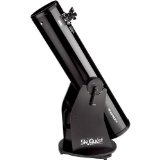 
Orion SkyQuest XT8 Classic Dobsonian Telescope
Some Further Resources
All of the telescopes I have shown n this article are available at amazon.com
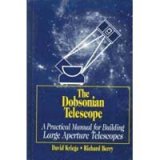 
The Dobsonian Telescope: A Practical Manual for Building Large Aperture Telescopes
This book tells how you can build a state-of-the-art Dobsonian telescope using readily available materials and supplies. Every step of construction is detailedin photographs and diagrams, and the underlying ideas are carefully explained.
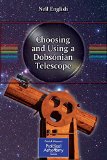
Choosing and Using a Dobsonian Telescope (The Patrick Moore Practical Astronomy Series)
In the 1960's, American amateur astronomer, John Dobson, designed a revolutionary kind of astronomical telescope featuring a lightweight large-aperture reflecting system on a simple mounting, using the then-revolutionary material called teflon. The design combines simplicity and portability with large-aperture prowess. Thirty years later Dobsonians remain supreme for visually observing faint deep-sky objects and are one of the best-selling large telescopes in the USA and Europe. This popularity is reflected in the recent increase of companies now heavily marketing Dobsonians, in particular, Meade (the "Lightbridge" range), Orion USA (XT Intelliscope series), and Skywatcher (Skyliner and Flextube models). This book is the ultimate guide to buying and using commercial Dobsonians, both 'Econo' and 'Primo' models, with in-depth accounts for the various models (plus accessories) on the market and descriptions of the many innovations that amateurs have made to optimize their telescopes' performance.
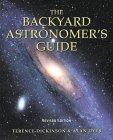
The Backyard Astronomer's Guide
Despite the book's title, there is very little about astronomy here, i.e., lists of constellations, star charts, night sky maps, or details about planets, stars, and galaxies. However, there is a wealth of information about the equipment used in astronomy, including prices, consumer-type information, advice on when to use and when not to use binoculars, telescopes, cameras, film, lenses, filters, and other items for the amateur astronomer. Four chapters, though, concern the observation of the solar system and deep space objects. There are also several chapters discussing the photographing of all types of astronomical phenomena. Though cost may deter small-to-medium-sized libraries, there is much information here for the experienced amateur, and some useful information for the beginner as well
Starry Night Complete Space&Astronomy Pack
|