Home

Will's Youtube Channel!






Hi, Thanks for visiting my website. My name is Will and if you have questions
or would like to
contribute projects or ideas you can contact me 
Telescopes and Astronomy - The Storm the Castle Guide
to a rewarding new hobby
Note from Will to my web visitors: I have created an enormous new section all about astronomy and telescopes. You can get all kinds of great information and stuff there about the hobby and the night sky. Check out the new astronomy and telescope section here
- Astronomy as a hobby
- What do you need to get started in astronomy
- About telescopes and buying your first telescope
- Recommended Astronomy Books for beginners
Astronomy as a hobby -
The beauty of a starry night brings a remarkable sense of awe and using
a telescope or binoculars can deepen this sense. With just some basic
equipment, a little knowledge and a few hours under a dark sky you will
be hooked on this rewarding hobby. Our night sky is full of amazing sights
and before long you will be finding and looking at planets, nebulae, galaxies
and many more objects.
Astronomy, like many other hobbies can be very expensive. Some of the
finer, and more powerful telescopes, can run into the tens of thousands
of dollars. But you don't need to spend this kind of money to thoroughly
enjoy this hobby. You can get started on a small budget.
What do you need to get started in your
stargazing?
There are a few things that you will need in order to get started as
a stargazer.
First off you will need clear nights away from any bright city lights.
If you live in a big city it will be difficult or even impossible to enjoy
this hobby. You will have to make plans to get out of the city for your
stargazing. Streetlights and other forms of night light in a city cause
something that astronomers refer to as light pollution. This pollution
brightens the night sky and makes it difficult to observe anything.
Is your night sky okay? This is easy to test. Simply go outside at night
on a cloudless night and look up at the sky. Is it a rich dark color?
Can you see thousands of stars? Can you make out the different colors
of the stars? That's right! Stars come in many different colors and you
should be able to see this.
If your night sky is a dim shade of gray and the stars are not crystal
clear then you will need to make plans to leave the city when you want
to do your stargazing. This will be the only way to realize the full potential
of your telescope or binoculars.
Second off you will need a handbook or star charts that will show
you where the various objects of interest are.
Just simply grazing around the night sky is very rewarding. But, with
a telescope or binoculars there are tens of thousands of stars and objects
to look at. And to be frank, most stars look the same! Do you know what
a planet looks like to the naked eye? It looks just like a star! So without
a guide you probably would never find any planets. There are also many
galaxies and nebulae that look just like stars to the naked eye. So get
yourself a good book with some star charts. It's worth the cost. I have
some recommendations here.
Finally you will need something to magnify the power of your eyes.
This can be either a telescope or binoculars. If you already have a pair
of binoculars then you can begin your stargazing!
About Telescopes
There are four different major types of telescopes that I will describe
here. I will give you the pro's and con's of each type. What type of telescope
you get will depend on your own personal preference and on your needs
and budget and this short summary will help you make a good decision as
to what is right for you.
The Types of telescopes
- Refractor
- Reflector
- Catadioptric (or Maksutov)
- Dobsonian
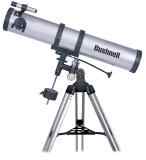
The
Refractor Telescope - This is the telescope that is most commonly
thought of. At the right end of the scope is a large lens. At the left
end of the scope is the small eyepiece that you look through. The picture
on the left shows this type of telescope with a small telescope mounted
on top. This is the spotter telescope. It helps you to easily find objects
in the sky. This type of telescope is very popular in the smaller sizes
and they can be quite inexpensive. But if you want to get a larger telescope
this type can be very expensive - easily costing thousands of dollars.
The
Reflector Telescope - Instead of a lens this telescope has a mirror.
Shown in the picture at the left is a reflector. The light comes into
the tube on the left, it travels down the tube to the mirror on the right
where it is reflected up to a small mirror to the eyepiece on the left.
So unlike the reflector where you look in one end and point. This telescope
has the eyepiece at the same end as the opening. Notice also the small
spotter telescope. One of the advantages of this type of telescope is
light gathering ability compared to price. You can get a very affordable
reflector with a ten inch mirror. A refractor with a ten inch lens would
cost easily ten thousand dollars. Disadvantage? Generally reflectors are
not as good as refractors. Given any refractor and reflector each with
the same size aperture the refractor will almost always outperform the
reflector. Bushnell
78-9518 Deep Space 675 x 4.5-Inch Reflector Telescope
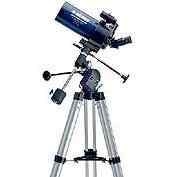
The
catadioptric or Maksutov telescope - This type of telescope combines
both the reflector and the refractor in that it has both a lens at the
front and a mirror at the back. This type of telescope generally has superior
performance to the other types of telescopes and even the smallest of
these telescopes will generally outperform larger scopes of the other
kinds. The disadvantage is the price. This more extensive arrangement
of lenses and mirrors comes at a cost. One big advantage is the portability.
This type of telescope is very easy to pack up and take out to a secluded
location. If you are really serious about astronomy this may be the type
for you. Konus
90 x 1200mm MotorMax Electronic Maksutov Reflector Telescope
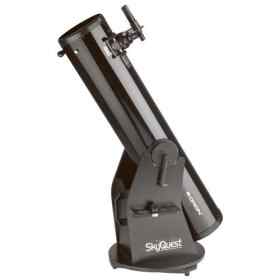
The
Dobsonian - This type of telescope has the identical mirror and optics
as the reflector telescope. The thing that makes it different is the style
of cradle that the telescope is mounted on. This type of mount makes the
telescope very easy to use and very price effective. This is a great option
for a beginner astronomer. It is easy to use and for a reasonable price
you can get a larger scope. Orion
SkyQuest XT8 Dobsonian Reflector Telescope
Astronomy Books for beginners
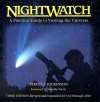
Nightwatch
If you are new to astronomy then this is the book for you. No mathematics or obtuse information. Just practical information on enjoying the wonders of the night sky.
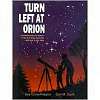
Turn Left at Orion: A Hundred Night Sky Objects to See in a Small Telescope--and How to Find Them
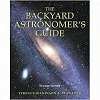
The Backyard Astronomer's Guide
By the same author this book is for the more serious amateur.The focus is on the equipment used: telescopes, cameras, film etc. If telescopes are your passion then this is the book for you.

Amazon has a Telescope store. Learn more about telescopes and browse through their enormous selection.
Amazon.com Telescope Store