So, to stop the ferment of your mead you should add two chemicals. And these are standard chemicals that wine makers use all the time. These two chemicals are Potassium Sorbate and Potassium metabisulfite. One of these stuns the remaining yeast in the ferment and the other prevents the yeast from reproducing. So, you don't truly get an absolutely dead ferment - you get yeast that are stunned and unable to reproduce, which is just as good.
Typically you add these two chemicals and then you wait a period of time for them to fully take effect before you bottle or sweeten. 48 hours is the usual period of time but go by the manufacturers recommendations.
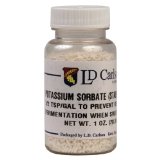
Potassium Sorbate - This is a chemical that is used to prevent restarting of the ferment in mead. It is added just before bottling. It will not stop the ferment but it will prevent a secondary ferment from occurring. This can be desirable because if your bottled mead, over time, starts a new ferment while in the bottle a pressure can build up and burst the bottle or the cork. Potassium Sorbate - 1 oz.
Bentonite - 1 lb.
Bentonite is a clay-like mineral that removes positively charged particles from wine. Add prior to primary fermentation to clear pectic and protein haze. Add 2 teaspoons with half a cup of boiling water (or very hot) and stir for 1-2 minutes. After the solution stands for an hour, mix and stir the solution into your wine. Let stand for 7-14 days during primary fermentation, then rack into a sanitized carboy.
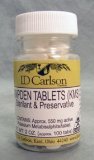
Campden Tablets (potassium metabisulfite) - 100 Tablets
Campden Tablets: Potassium Metabisulfite (KMS) prevents wild yeast, bacteria growth, and oxidation in your wine. The convenient tablet form takes the guesswork out of measuring. Each tablet adds 75 ppm free SO2 per gallon (pH dependent). Grind the tablet into a powder and dissolve in water before using. 100 tablets per package.
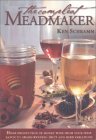 
The Compleat Meadmaker : Home Production of Honey Wine From Your First Batch to Award-winning Fruit and Herb Variations
This is the book I have been using and it is pretty much the de-facto standard for meadmakers. If you want lots of information, recipes, history and lots of great stuff about mead and how to make it then this is the book you must have.
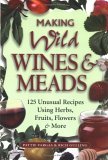
Making Wild Wines & Meads: 125 Unusual Recipes Using Herbs, Fruits, Flowers & More
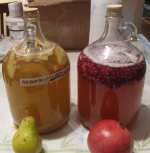
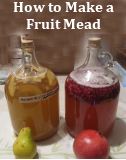
New, I and a friend made two wonderful meads today (melomels) a pear and a pomegranate. Just a few pictures and notes on what we did. Simply a lot of fun! See the pics here |