If you brew beer or make traditional wines then you are probably familiar with almost all of these terms. Making mead shares a lot in common with other types of brewing. But if you are new to the whole process of brewing or fermenting you are probably running into words and terms that are new to you. This page gives you an explanation of most of the common terms that a mead maker should know.
I know that when I first started making mead I ran into a lot of strange terms that I never heard of before. So I thought it might be helpful if I posted explanations and pictures. I haven't included any of the chemicals that are typically used in mead making. I do have a page for that: Common Chemicals used in Mead Making
Airlock - a plastic device you place on a carboy, jug, or fermentation bucket. It preserves the sanitation of the fermenting mead by allowing gases to escape while blocking any foreign matter like yeast or bacteria to get into the ferment. usually an airlock is filled with water.
Autolysis - An unwanted situation where the yeast in a must runs out of food and feeds on its own dead yeast cells.
Carboy - A glass container used to ferment and age mead in. Typical sizes are 1, 3, 5 and 6.5 gallons.
Fermentation Bucket - A plastic bucket that is used to create the initial batch of must. Typically is has a cover that affixes to the top and a hole to insert an airlock. Often it will have a spigot at the bottom so liquid can be drained out. A fermentation bucket is convenient because it has the large top opening which makes it easy to mix and stir ingredients. This can be difficult to do if you use a glass carboy. The light blocking property of a fermentation bucket is also good for the process of making mead.
Final Gravity - This is the final density of the mead once fermentation has stopped. The more honey that has been used typically the higher the final gravity. The type of yeast used also affects final gravity. This is because each type of yeast has an alcohol tolerance and once that tolerance is reached the yeast will stop the fermentation process leaving behind a percentage of honey.
Fining and fining agents - These are chemicals added to the mead to clarify it. Bentonite is a common fining agent.
Flocculation - This is the layer of sediment that forms on the bottom of the carboy. It is dead yeast.
Hydrometer - A tool used to measure the Specific Gravity of a liquid.
Must - The name for a mixture of Honey, water and other ingredients. Think of the must as what we start out with. Eventually it turns into Mead.
Original Gravity - The initial gravity reading of your must. It is a measure of the density of the must. Water has a gravity of 1. The more honey you put in the must the higher the original gravity will be.
Pitching - This is the term for adding the yeast to the must. You pitch the yeast into the must. Typically you will first prepare the yeast by mixing it with warm water. This varies from yeast to yeast and most yeast will come with instuctions on how to do correctly prepare and pitch it.
Primary ferment - This is the first stage of ferment when you have added all the ingredients. This is typically done in a fermentation bucket.
Racking - The process of siphoning the mead from one container to another. This is healthy for the mead. You leave much of the sediment and flocculation behind. It helps to clarify the look and flavor of the mead.
Residual Sugar - The amount of sugars remaining in the mead once the ferment has completed.
Secondary ferment - This refers to the fermentation that is occurring in the second container - where you have siphoned out of the first container. This ferment is less vigorous than the first and takes much longer.
Specific Gravity - This is the measurement of the density of a liquid. Water is the standard and considered to be 1. The more honey you mix with water the higher the specific density will be. This is a useful measure because you can use it to understand how much honey has been transformed by the yeast in your mead.
Starter - this is a batch of yeast that is prepared ahead of time to be pitched into your must. Often you mix dry yeast with warm water - this activates it. You can also purchase starters that come in liquid form.
Love Kindle Books? I just published my kindle book on how to make mead. It is a no-nonsense easy guide to making a batch of mead. You can get it in the kindle store.
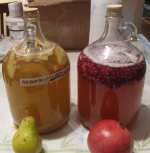
New, I and a friend made two wonderful meads today (melomels) a pear and a pomegranate. Just a few pictures and notes on what we did. Simply a lot of fun! See the pics here
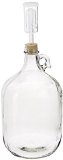
If you have never made mead and would like to give it a try very inexpensively this is a terrific setup. Very inexpensive and Prime shipping too. You get a gallon glass carboy an airlock and the rubber stopper. I love this setup. Fermenter including Rubber stopper and Airlock