Home

Will's Youtube Channel!






Hi, Thanks for visiting my website. My name is Will and if you have questions
or would like to
contribute projects or ideas you can contact me 
How to Make a Sword -The Six Step Process
The process of making a sword
is more than what you see in the movies. For many people being a blacksmith
is a fantasy where you pound steel against an anvil, dip it in water and
voila! You have a completed sword ready to mow down the evil hordes of
creatures that lurk in the forest. But swordmaking is much more than this.
Swordmaking is both an art and a craft and it takes hard work, a lot of
practice and a significant amount of specialized tools to create a sword.
It also takes many years of practice to become proficient at this skill.
Before the blacksmith or swordsmith
actually starts hammering or heating the metal for a sword there is a
lot of work to be done. The sword size, shape, properties, and metal composition
all have to be decided upon. These factors determine the amount of metal,
the temperatures of heating and the specific steps in the process that
have to be completed. This article doesn't cover the complete art of swordmaking.
It will only discuss and outline the process of smithing the blade of
a sword
.
There are many different methods for making a sword and the art has changed
over the centuries as technologies, tools and the science of metallurgy
has changed. But for the past five hundred years there has been one method
that still stands as the most common. This is the six step method. of
taking a bar of the desired metal to a completed sword.
The First step is Forging
A bar of the desired metal or combination of metals is heated in a forge
and then it is hammered into shape.(The shape of a sword) This hammering
process can take a long time and it is called drawing out the sword. The
sword is worked on in sections (usually around 6 inches in length) and
repeatedly hammered and heated until it comes into the desired shape .This
process is repeated many times and the sword is often heated then allowed
to cool without hammering. This is required by the metal to keep the desired
properties of strength and flexibility. Once this step is completed the
sword is in the proper shape but the properties of the metal make it very
brittle and something has to be done to give flexibility to it.
Step Two: Annealing
Annealing softens the sword and makes it easy to grind into shape. The
sword is now heated and then allowed to cool very slowly. Often it is
wrapped in an insulating material to slow down this cooling. It can take
as long as 24 hours and this annealing process makes the sword soft and
easy to grind.
Step Three: Grinding
Now the blacksmith uses a grinder to work out the edge and point of the
sword. This would also be when any engraving is added. This is not a completed
sword yet. It is still much too soft so it must be hardened.
Step Four: Hardening
Now the sword is heated to a very high temperature and then placed into
a quenching tank. (This is what we always see in the movies). This quenching
allows it to cool quickly and evenly which will harden the metal. After
this hardening the sword is brittle and something must be done to make
it strong yet flexible.
Step Five: Tempering
Again the blade is heated and quenched. But now the heating is at a much
lower temperature than was used at the hardening. This heating/quenching
cycle may be repeated several times. This tempering allows the blade to
be strong but not brittle. This is one stage where the skill and experience
of the swordsmith is invaluable. It takes a trained hand and eye to understand
the properties of the meta. It will have a certain amount of flexibility
yet still retain its sharp edge. Now the sword is ready for completion.
Step Six: Completion
The sword blade itself is now complete. Now the additional parts will
be added such as the pommel the guard and the hilt.
For the past five hundred years
the only way to learn the art of swordmaking was to find a skilled blacksmith
or swordsmith that was willing to take you on as an apprenctice. Because
of the specialized skills and tools, and the skill that is required this
tradition remains the best way to do it today.
Before you invest lots of time in money in equipment and materials you
should find a master that is willing to teach you the basics of the art.
You won't have to devote your life to endless hours of hammering against
an anvil and with a little perseverance, a little patience and some practice
you will be able to make some decent swords that you can be proud of.
Storm The Castle Top Picks for Fantasy Swords
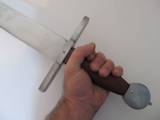
How to Make a Real Sword - I take you through the whole process of making a sword. And this one is a good sized sword! Really beefy and feels good in the hands. How to Make a sword
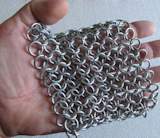
How to Make Chainmail: This is a tutorial that shows you step-by-step how to make chain mail. I show you which wire to use, how to create the rings and how to weave the actual mail. How to make chainmail. I will also be doing a tutorial on how to make a piece of chainmail armor.