1. Doodling and drawing with a free style is the best way to get your creativity and imagination flowing. The process to follow is to simply draw quick sketches and then modify them as things start to appear. It goes something like this: Draw a roughly human shaped head then start to add a body to it but don’t consciously make it a human body, vary your lines and see where it goes. You will be surprised by what happens. Your eye will start to see things in a different way and you will create some fantastic creatures. These should only be quick sketches and you should draw lots of them – fill the sheet of paper and see where the drawings go. This is a great way to come up with the initial idea for a new fantasy creature.
2. Changing the shape of existing creatures and animals – Many of the most familiar fantasy creatures are variations of familiar animals. A Unicorn is a variation of a horse and a Dragon is a variation of a Dinosaur. Think of other creatures and doodle their rough shape while thinking up variations. What would a cat look like if it had scales instead of fur? Or how about a Giraffe with short legs?
3. The Power of Combining Animals – this is a very powerful way to create new fantasy creatures and Greek Mythology is loaded with this kind of beast. A Centaur is half man and half horse; and a mermaid is half woman and half fish. The possibilities are endless and when you are doodling out ideas don’t limit yourself to just upper and lower body combinations. Try combining limbs, torsos, heads, hands, feet or anything else that strikes you.
4. The creative power of distortion – Often times fantasy creatures are distortions of humans or other animals. Think of your drawing as a lump of clay that you can mold into any shape. Distort the arms, legs, torso, head or anything else. This will reap some great results. If you draw a human that is very skinny with an oversized head you are heading toward something goblin-like. And if you draw a human that is very thick and stocky you might be heading toward a Troll or Ogre.
5. Here are a couple of unusual ways to tap into your imagination and create unusual fantasy creatures. Try making an unusual sound then try to draw the creature or beast that would make that sound. Or write out a description in words for your beast then try to draw it. These two techniques bring other parts of your brain into the process not just your hand-eye coordination.
The Mechanics of How to Draw Better Fantasy Creatures
1. Everything relates to human anatomy – If you practice drawing people you will get much better at drawing fantasy creatures. The same basic rules of musculature and skeletal understructure apply to all biological creatures – even made up ones. Remember: Skin or fur is something that covers muscles and bones but don’t completely hide it. The bones and muscles show through. So draw more people and your fantasy creatures will improve.
2. Draw more existing creatures - Fantasy creatures are almost always variations of creatures and animals that already exist. If you want to draw a dragon you should think about and look at pictures of dinosaurs and large lizards. If you want to draw a unicorn you should use a horse as your model. And there are many variations on the human form. If you want to draw a dwarf, an elf or a goblin you can use the human form as a perfect starting point. The important thing to remember is that the more horses you draw the better your unicorns will be and the more dinosaurs you draw the better your dragons will be. And the best thing about this is that you can easily find pictures of horses and dinosaurs to look at while you draw.
3. Use your drawing tools for more expression – When drawing a creature you have to think of its disposition. Is it a gentle creature or a mean creature? Use your pencil in a way that expresses this. Dark, bold and sharp lines are usually better when drawing angry or scary creatures and soft lines are usually better for gentle, mythical creatures. This is something that is often overlooked but it is very important. You are using your pencil in a way that goes beyond just drawing lines. And this applies to a whole spectrum of techniques including short lines, long lines, choppy lines and even shading.
4. Don’t hesitate to look at and copy other peoples work. Carefully looking at other fantasy work will improve your work dramatically. When doing a copy you are forced to see things you wouldn’t normally see and this is a great way to learn how to do it yourself. – Just don’t claim the creature as your own.
5. Keep a sketch and doodle book and work in it often. This is something that works real well for me because looking over many pages of doodles you have done in the past will often inspire new ideas for drawings of creatures.
Drawing fantasy creatures is a challenging yet rewarding hobby. It has the dual benefit of improving your ability to draw while cultivating your creativity and imagination. With a bit of practice and an understanding of these basic tips you will be drawing some amazing fantasy creatures in no time at all.
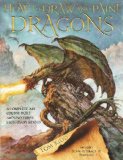
How to Draw and Paint Dragons: A Complete Course Built Around These Legendary Beasts
Dragons have figured in the visual arts from time immemorial, but today they are more popular than ever as subjects for computer games and science fiction books, posters, and films. A noted fantasy artist shows students how to create a wide variety of dragons from conception to finished illustration. He instructs in ways to start with the anatomy of actual living species such as reptiles, horses, birds, and bats in the creation of convincing and aesthetically pleasing dragon art. Students learn how to draw and paint a complete anatomical skeleton, apply muscle groups and scaly textures, create dynamic poses, and generally master the skills that bring dragons to life in brilliant finished artwork. Many different legendary dragon species are shown, and templates are provided for tracing and computer scanning. Magnificent color illustrations on most pages.
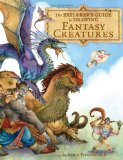
The Explorers Guide to Drawing Fantasy Creatures -
If you're looking for an escape from ordinary life, the adventure starts here. The Explorer's Guide to Drawing Fantasy Creatures brings to light a fantastic realm of creatures so elusive and remote, they can be found only in myths, nightmares, and the work of artists like you. With years of perilous creature-drawing adventures behind her, Emily Fiegenschuh leads you step by step through the entire process, from expressive gesture drawings to beautifully detailed artwork, right down to all the gruesome details--like how to draw the leathery wings of dragons, the Minotaur's impressive physique, and the brilliant plumage of the Hook-Legged Bodeo.